

















If Israelis see themselves as simply one more national identity among others, then the redemption will have been but a beautiful mirage in our long wanderings in the desert. And so, as Passover comes around again, we will read again the same story of our origin, and we will again remind ourselves that we are always still in Egypt.  
If God saves this nation from utter ruin, He surely will have used the young men and women being produced by classical Christian schools in this land. For they will have the intellectual firepower and strength of character to reform this nation both politically and socially.
When a university advertises Catholic identity, it is making a promise to students and families: that faith and reason will be engaged seriously, that moral questions will be treated as real, that the human person’s complexity will not be assumed away.
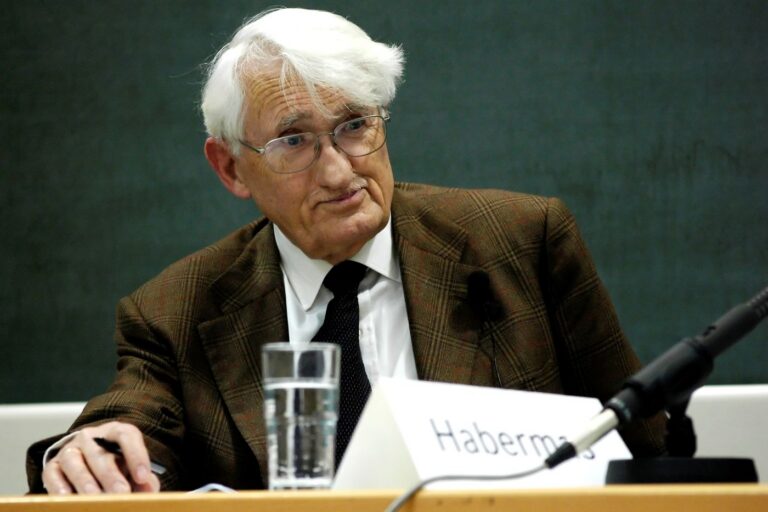
The ideal speech situation is not Habermas’s greatest legacy. For me, it was his rejection of that virulent form of Marxism that had infected the tradition to which he became the principal heir. That he did so with such personal dignity will stand before future generations as an example that did not require speech, but simply the power of a silent witness.   
This war does not appear to be genuinely defensive against an imminent threat; it is rather undertaken to prevent a threat that might, at some time in the future, materialize, and is therefore a “war of choice.” Natural law just war theory acknowledges no such category: justified warfare is always a matter of necessity. 
An in-depth review of Matthew Tapie’s The Mortara Case and Thomas Aquinas’s Defense of Jewish Parental Authority
For all its failures and drawbacks—and there are many—American culture’s focus on individual freedom is intoxicating and infectious.
Increasingly in our society and politics, the value of life has been subordinated to the aims and narratives of manipulative discourse. The Holy Father is right to warn us of this danger.
When politics becomes our highest love, it will also become our cruelest disappointment, leaving our homes colder, our holidays lonelier, and our common life harder to sustain. 
We are using our genius to degrade ourselves into nothing much at all, and the existential results are anxiety and shame at how small we have become. 
If the witch crazes of recovered memory and multiple personalities are making a comeback, perhaps now aided by social contagion online, we would do well to gird ourselves with a sound understanding of psychiatry’s vulnerability to misdirection—and of the harm it can do to the souls under its care.
Dorothy Day’s radical call to love rings louder for us today than Zohran’s Servile State solution ever will. 
Conservatism, if it deserves the name, cannot be merely a marketplace of grievances or a contest of personalities. It must be a training ground for judgment ordered to the good of persons, families, communities, and the political order.  
The human future, if there is to be one worth having, will be normal; that is to say, it will conserve the things that have always been good for the human to have, hold, cherish, and sometimes fight for.
The job of present-day conservatives isn't to tear down, lament, and criticize. Instead we should attempt to preserve the good, while mending those things that are broken.
This book invites spouses to look beyond themselves to better understand the greatness of the gift they have received and make it fruitful.
Unlike the Iraq war, Trump’s Iran war is being fought without a clear plan or congressional approval. For these and other reasons, it plainly does not meet the conditions for a morally acceptable war, as set out by traditional just war doctrine. 
The collapse of the late Roman republic came not in an instant but over time: through a period of profound internal fracture and systemic chaos. As we approach the 250th anniversary of the American founding, we find ourselves in a similar period of civic fragmentation and disengagement.
America is great because America is good: that is the proposition. But is the proposition plausible? And “good” means ... what?
The conservative legal movement has come far, but we’re just getting started. 
The University of Notre Dame does not and ought not have the luxury of relegating moral and theological questions to the margins.
More than the squabbles of party politics, conservatives ought to be concerned with defending our civilization’s way of life and the ordered liberty that sustains it.
The culture of self-censorship, cancellation, and lack of exposure to viewpoints has adversely affected the university. The increasing ideological skew of the faculty is largely responsible. Universities need to address these issues to help restore their truth-seeking mission. 
The confessions are not a ball and chain. They are a covenant—public, binding, and liberating.